How to Follow Up on Instagram Leads Without Sounding Spammy

Getting a lead on Instagram is the easy part.
Someone comments on your post, replies to your Story, asks for details, or responds to a keyword in DMs. That first interaction shows interest. The harder part is knowing how to follow up without sounding repetitive, awkward, or too eager.
This is where many creators and small businesses lose momentum. They either follow up too hard and make the conversation feel forced, or they wait too long and let warm leads cool off.
Good Instagram follow-up should feel helpful, timely, and relevant.
If you want more replies, stronger conversations, and more bookings or sales from Instagram, your follow-up needs to feel like a natural next step, not a generic sales nudge. This is especially true if your Instagram lead capture is already working and you want to convert more of that existing interest.
Why Most Instagram Follow-Ups Get Ignored
Most weak follow-ups fail for one simple reason: they are written from the seller’s perspective, not the lead’s.
You see it in messages like:
Just checking in
Following up here
Are you still interested?
Did you see my last message?
These are easy to send, but they do not give the other person a reason to reply. They add no clarity, no value, and no momentum.
The best follow-ups do not just “bump” a conversation. They move it forward.
What Makes a Follow-Up Feel Spammy
A follow-up usually feels spammy when it:
repeats the same message without adding value
comes too often
sounds copied and pasted
pushes for a sale too early
ignores the original context
This matters even more on Instagram because DMs feel personal. If your message feels disconnected from the action that started the conversation, it will feel intrusive quickly.
What a Better Follow-Up Looks Like
A strong Instagram follow-up usually does three things well.
1. Reference the Original Action
The person should instantly know why you are messaging.
That could be:
a Story reply
a comment on a post
a keyword trigger
a pricing question
a request for more info
a freebie download
That context makes the message feel relevant instead of random. This is why comment-triggered DM flows often perform better than loose manual outreach.
2. Add One Useful Next Step
Do not follow up just to remind someone you exist. Follow up with something that helps the person move forward.
That might be:
a quick answer
a package breakdown
a booking option
a recommendation
a simpler next step
3. Make Replying Easy
Most people will not respond if the message feels like work.
Use prompts like:
Want me to send the details here?
Should I share the pricing options?
Want the quick version?
Still looking for help with this?
The easier the reply, the better the response rate.
Segment the Lead Before You Follow Up
Not every Instagram lead should get the same message.
Someone who commented “link” is not in the same place as someone who asked about pricing. Someone who replied to a Story is different from someone who almost booked and then went quiet.
A simple way to think about it:
Curious leads
These people engaged lightly. Keep the follow-up soft, helpful, and low-pressure.
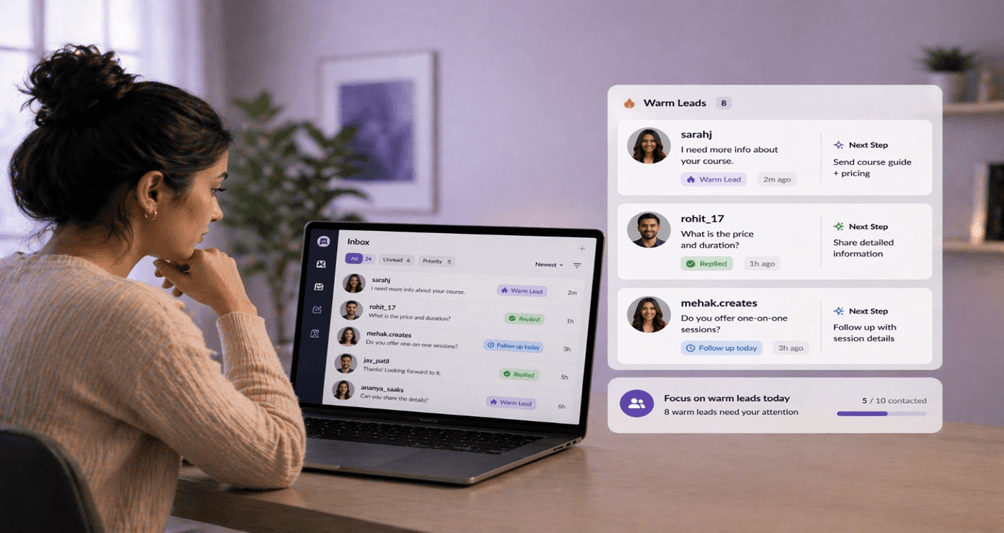
Warm leads
These people asked questions or requested details. You can be more direct here.
Decision-stage leads
These people asked about pricing, packages, timing, or availability. They need clarity and a simple next step.
This is why structured DM flows work better than random follow-up. When the first interaction is clear, the next message becomes easier to personalize. The same applies to Story reply leads, where context matters even more.
A Simple Follow-Up Framework
If you want your follow-ups to sound polished instead of pushy, use this structure:
Reference the interaction
Examples:
You asked about this in Stories the other day
You grabbed the guide from my post
You asked for the link on that Reel
You had asked about pricing earlier
Offer one useful next step
Examples:
I can send the quick pricing breakdown
I can show you the easiest package to start with
I still have a few slots open this week
I can send a simple example if that helps
Keep the tone light
Do not over-explain. Keep the message short, clear, and easy to answer.
Better Instagram Follow-Up Examples
For a creator selling services
Hey, you had asked about support with Instagram content earlier. If helpful, I can send the simple package breakdown here so you can see what fits best.
For a salon or clinic
You asked about bookings earlier, so just checking back in while I still have a couple of slots open this week. Want me to send timings?
For a jeweler or product business
You had asked about this piece earlier, and it is still available. I can send pricing or a closer look here if you want.
For a freebie follow-up
You grabbed the guide from my post a little while back. If you want, I can also send the next step I’d recommend based on it.
These work because they are specific, calm, and useful. They do not ask for attention. They make replying easier.
When Should You Follow Up?
Timing matters.
A practical rhythm looks like this:
First follow-up: within 24 hours
Best for warm leads who asked questions or requested details.
Second follow-up: 2 to 3 days later
Use this only if the offer is still relevant and you have something useful to add.
Final follow-up: a few days after that
Keep it short and respectful. This is your last helpful touch, not the point to push harder.
Follow-up timing should match buying intent, not your own urgency.
How Automation Helps Without Sounding Robotic
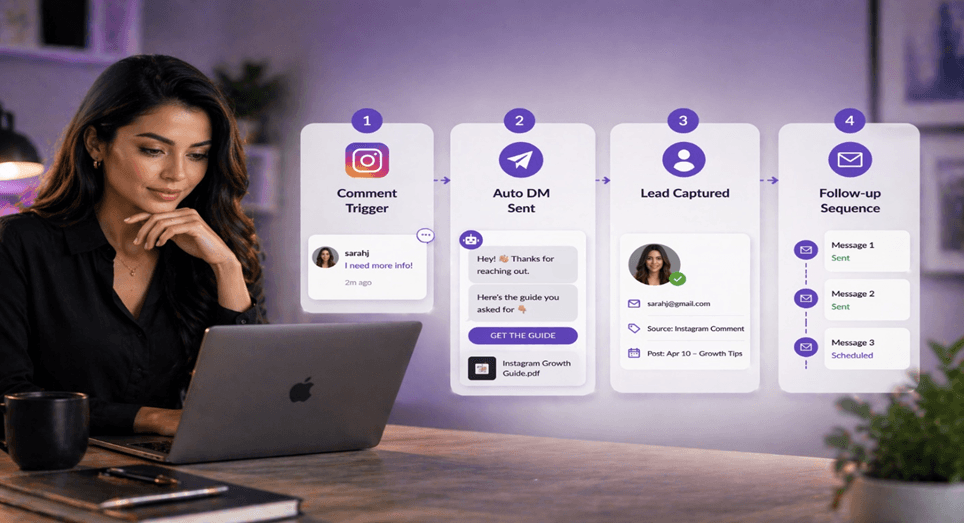
Manual follow-up works when volume is low. Once you start getting more comments, Story replies, and inbound DMs, it becomes easier to miss leads or reply inconsistently.
That is where automation helps.
The key is using automation to support the conversation, not replace it. Someone comments on a post, gets an automatic DM, and then receives a follow-up tied to that action. Someone replies to a Story and gets a next step based on that interest. Someone requests a freebie and gets a follow-up connected to that resource.
That kind of system feels better because it is context-based.
For creators and small businesses, simpler Instagram-first tools often make more sense than broader, heavier systems. PilotDM fits that model well because it is built around Instagram lead capture and DM workflows without unnecessary setup complexity. The free angle matters too, especially for smaller teams testing lead generation without taking on a heavier tool stack. This also works well when you want to collect emails through Instagram DMs without making the conversation feel forced.
Best Practices for Better Follow-Up Messages
Sound like a person
Instagram DMs should feel human, not corporate.
Keep messages short
Shorter messages are easier to read and reply to.
Do not over-message
A few relevant follow-ups are better than constant nudging.
Personalize with context
You do not need full manual customization every time, but the right cue makes a big difference.
Respect usually converts better than pressure.
FAQ: Following Up on Instagram Leads
How do you follow up with Instagram leads without sounding spammy?
Reference the original interaction, add one useful next step, and keep the reply easy. A good follow-up should feel like help, not pressure.
When should I follow up with an Instagram lead?
For warm leads, the first follow-up usually works best within 24 hours. A second follow-up 2 to 3 days later can work well if the offer is still relevant.
What should I say in a follow-up DM on Instagram?
Keep it simple and contextual. For example: “You asked about this earlier — want me to send the quick details here?”
How many times should I follow up with an Instagram lead?
Usually 2 to 3 relevant follow-ups are enough. Beyond that, the conversation can start feeling forced.
Final Thoughts
Following up on Instagram leads does not have to feel awkward or salesy.
The strongest follow-ups are the ones that sound relevant, helpful, and easy to respond to. They continue an existing conversation instead of forcing a new one.
If your follow-up adds value, respects context, and keeps the next step simple, it will feel far more natural than the generic “just checking in” message.
For creators and small businesses, that shift matters. Better follow-up improves not just reply rates, but the quality of the conversations that lead to bookings and sales.
If you want a cleaner way to capture leads and follow up inside Instagram without making your workflow feel heavy, PilotDM is built for exactly that. It helps creators and businesses run Instagram-first DM flows that are simpler to set up and easier to manage. You can pair that with stronger CTAs too, especially if you are already testing Instagram CTAs that get more comments and leads.